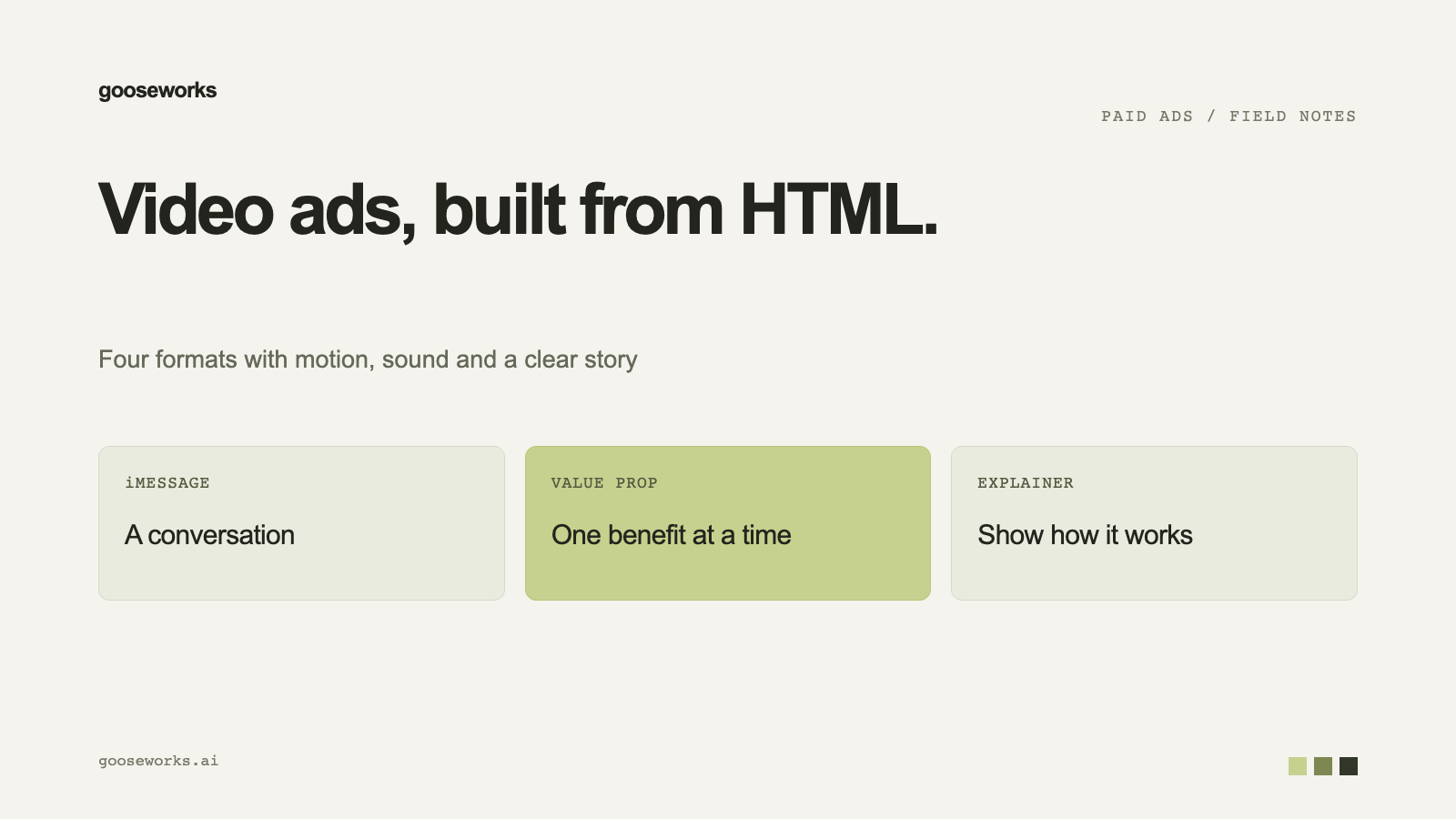

Some video ads do not need a video generation model. If the ad is a phone screen, a chat thread or animated text, an agent can build it as HTML and render it. That makes these formats fast, cheap and easy to produce in many variants.
Formats that work this way
- iMessage ads. A text conversation on an iPhone frame, with sound effects, music and an end card. See how to make iMessage video ads in Claude.
- Value prop ads. A fast-paced video that explains your product's benefits from your logo and product images. See value prop video ads from HTML.
- ChatGPT and Apple Notes screens. The same phone-screen approach with a different interface.
- Animated explainers. These use image and animation models for the scenes, with HTML and ffmpeg for assembly. See the 45-second explainer workflow.
Goose lists every format, with a demo video for each, at make.gooseworks.ai/videos.
How an order works
- Ask your coding agent for a video ad: "Make me a video ad for my brand."
- Say what the ad is for: a launch, a sale, how the product works.
- Pick a format from the table.
- The agent checks your computer has the tools it needs.
- Review the script and other pieces before any video is rendered.
- Say go. The finished MP4 is saved to your project.
Each paid step is approved before it runs. The small pieces come first: the script, a voice sample, the music, the end card. Video clips are made only after you approve them.
What your computer needs
Claude Code, Codex or Cursor connected to Goose, plus ffmpeg, ffprobe and Node 18 or newer. Phone-screen formats also need Playwright's Chromium browser. Run npx gooseworks doctor to check.
What your brand needs
A logo and clean product photos. Some formats need more, such as a screen recording of your app. The format table says what each one needs.
Try it
Start at gooseworks.ai/ads.